
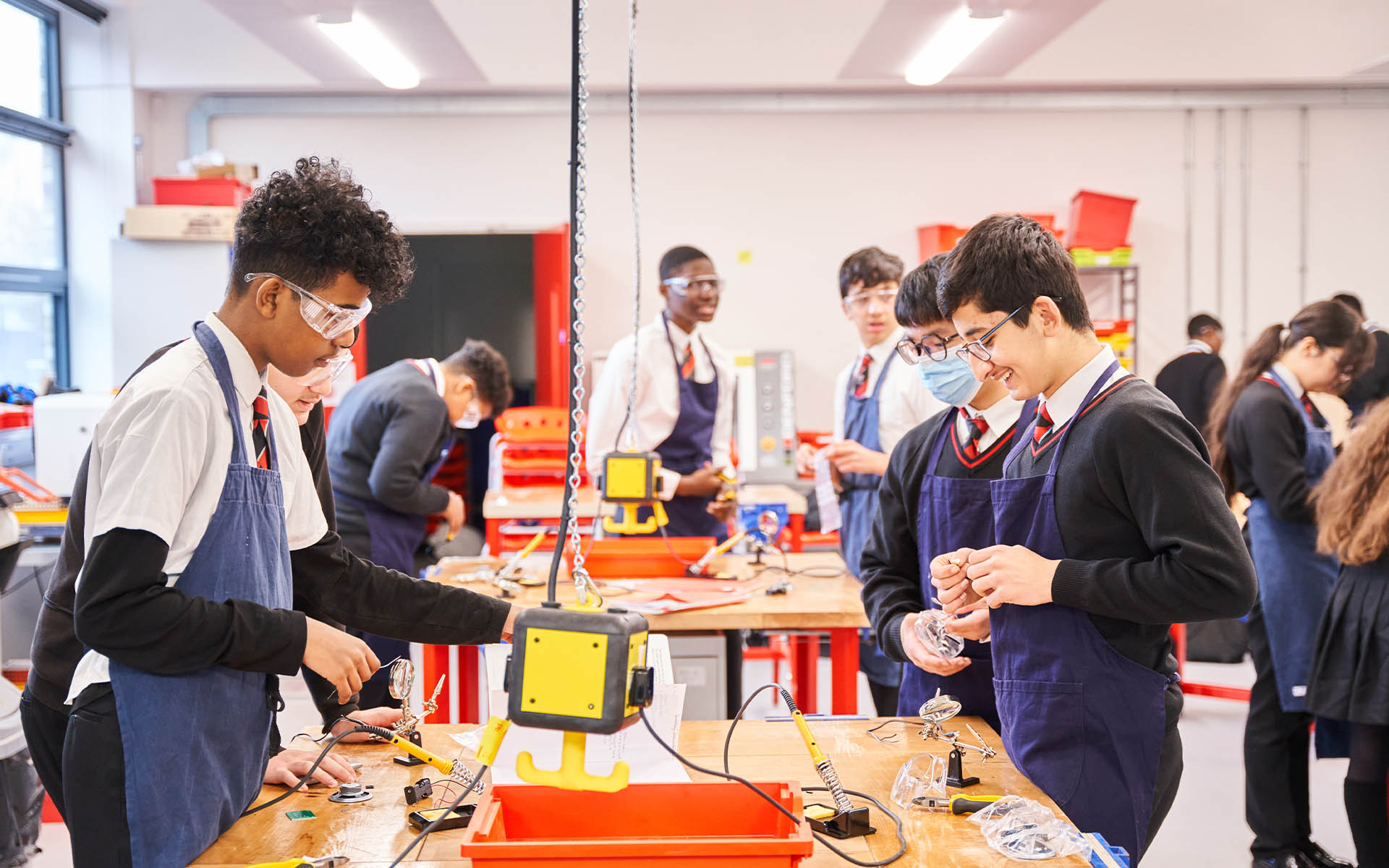
DT, and Food Preparation & Nutrition
Both the Design and Technology and the Food Preparation & Nutrition curricula have been developed in a way that provides pupils with opportunities to develop their skills alongside combining their knowledge and understanding in order to create innovative products.






Food Preparation
- Develop pupils‘ knowledge and application of the Eatwell Guide leading to good eating habits, an awareness of the issues surrounding food provenance, food insecurity and food waste.
- Empower pupils to be independent and confident in a cooking environment.
- Highlight the working characteristics of ingredients to enable pupils to make alternative choices according to their cultural or religious values, access to ingredients, and dietary requirements such as allergies.
- Embed lifelong cooking skills that can lead to either industry or further academic/vocational qualifications and future career paths.

Key Stage 4 course
AQA GCSE Food Preparation and Nutrition
Enrichment opportunities
- Creative Faculties Week (Together We Create)
- Opportunity to compete in The Great Saracens High Bake Off
Skills
Independence,time management, critical thinking, problem solving,
creativity,basic cooking skills( life skills) nutritional awareness
Progression Route
Careers that feed the nation: the food & beverage industry Careers that inform the nation: Sports nutritionist, Dietitian
Useful Websites
Food a Fact of Life
Tasty Careers
BBC Bitesize
Subject lead
Mrs Tobin
Design and Technology
All pupils study DT at Key Stage 3. They rotate termly between DT, Food and Art.
Throughout all Key stages the focus is on structured creativity, iterative design and communication of ideas, whilst understanding the theory, provenance of materials and the environmental impact of our use there of; safe, appropriate and skilled use of tools and machines; honest evaluation and critique of both existing products, designers work plus students own made products. The pupils cultivate an awareness of the Life Cycle of Products from resource extraction, global transportation, through manufacturing, use and end of life.
During KS4 all pupils will learn to communicate their ideas in literary terms, by hand drawing, modelling and computer graphics. There is a focus on both traditional and current manufacturing; the use of tenon saws and vacuum formers, through to Laser cutters and 3D printers.
Our KS5 pupils build on their existing knowledge and experience to become more Industry and Commercially aware. The Product Design A level prepares them for University or Apprenticeship.
Both GCSE and A level culminates in an exam plus a project based assessment (NEA), where research, analysis and experimentation results in the creation of a product, and/or a problem solved. The exams are worth 50% of the grade and the NEA the other 50%.

Key Stage 4 course
AQA Design and Technology
Key Stage 5 course
AQA A Level Product Design
Enrichment opportunities
3D printing club, access to workshops and computer graphics during lunch and after school.
#togetherwecreate week: a week of intensive DT immersion with hands on design and make, guest speakers and visitors.
Skills
Analyse, evaluate, communicate, design, draw, CAD, tool and machine skills, awareness of the need for Sustainable living.
Progression Route
The D&T curriculum is structured around the design, make, and evaluate cycle and builds skills and knowledge progressively across key stages.
University Degrees:
- Product Design
- Engineering (Mechanical, Civil, Electrical, etc.)
- Architecture
- Graphic Design
- Stage Design
- Plus professional careers in design, innovation, and manufacturing sectors.
Useful Websites
BBC Bitesize
Design Museum
Design Boom
V&A
Design Week
Dezeen
London Design Festival
RIBA
Shigeru Ban Architects
Ron Arad
Heatherwick
Subject lead
Mrs H Garrett-Gunn